
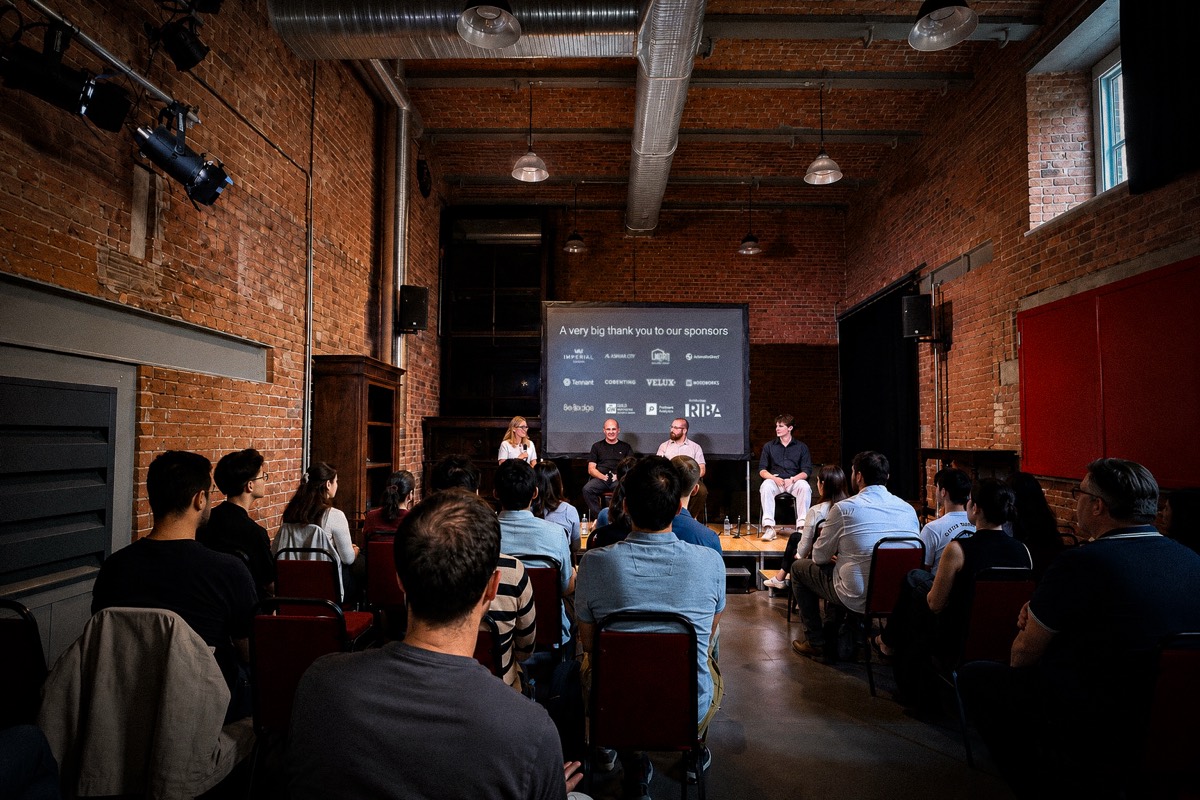
Anna and I attended a Manchester Society of Architects event on AI and the built environment last night. There were plenty of discussions about image generation, automation, planning, data and productivity. All interesting — but the conversation I kept thinking about afterwards was something else entirely.
The moment that stuck with me
One speaker described using AI to help develop planting schemes. The output was good. Then an experienced planting colleague reviewed it and immediately spotted a species that wasn't suitable for the conditions.
It stuck with me because another audience member later raised a concern about whether AI could contribute to a future knowledge crisis. If younger architects increasingly rely on AI to generate answers, will they still develop the expertise needed to challenge those answers?
Architecture already struggles with this
Architecture already struggles with knowledge transfer. Some of the most valuable things I've learned came from sitting beside experienced architects — listening to them explain why they were making a decision, what they'd seen before, or where something had gone wrong on a previous project.
That knowledge is rarely written down properly. It's one of the reasons we're building lintil.
Maybe we're approaching AI from the wrong angle
The discussion left me wondering whether we're approaching AI from the wrong angle. Maybe the biggest opportunity isn't generating more information. Maybe it's preserving and sharing the expertise we already have, before it disappears.
Thank you to Liam Cox, James Alexander, Michael O'Reilly and the Manchester Society of Architects for a genuinely thoughtful discussion.